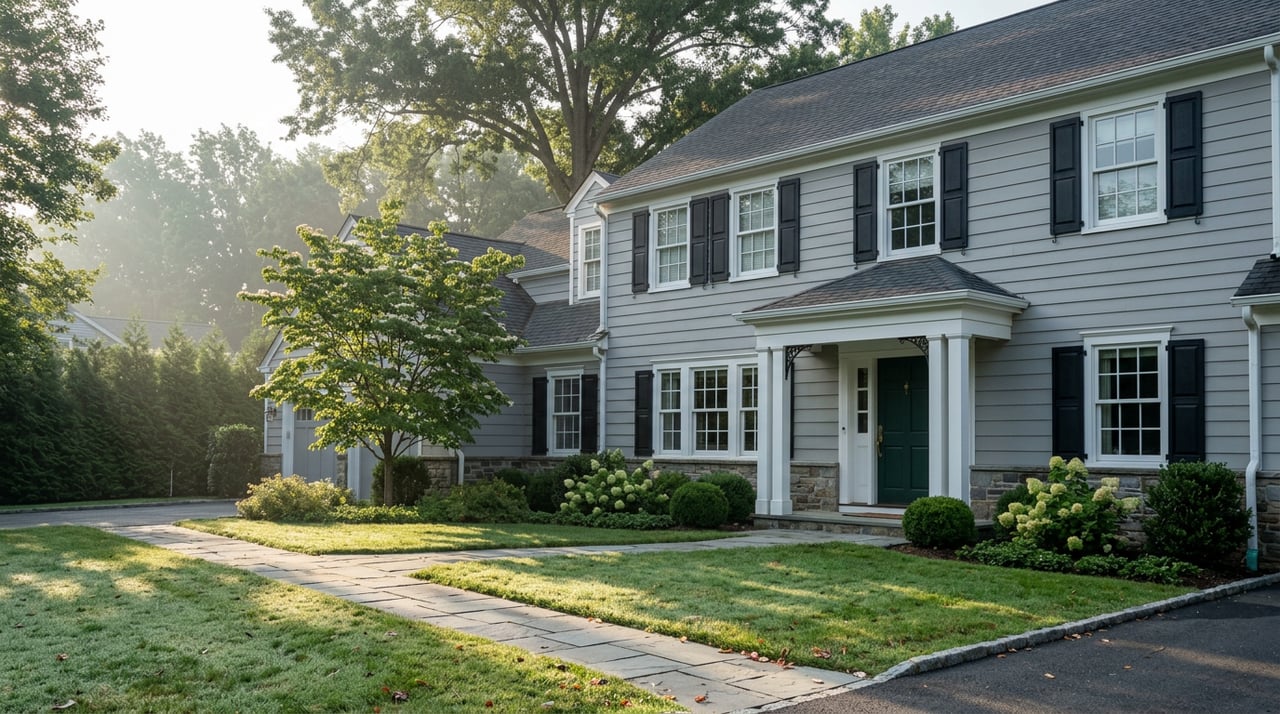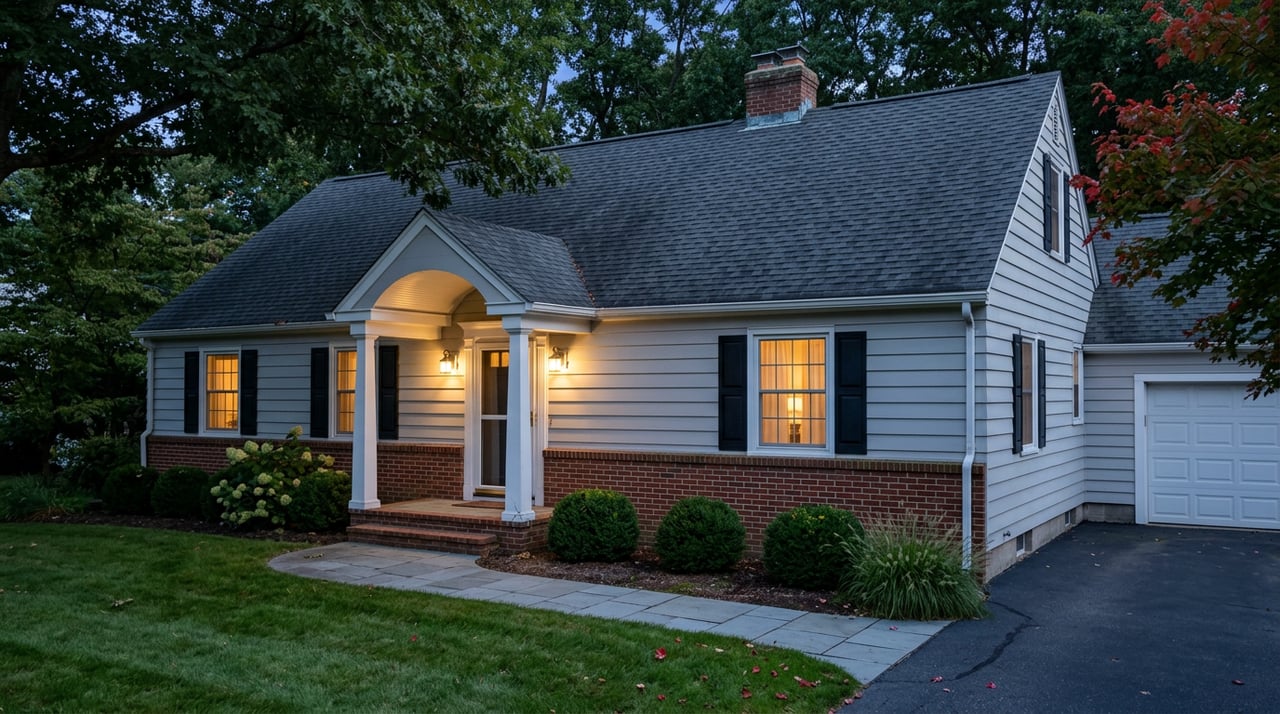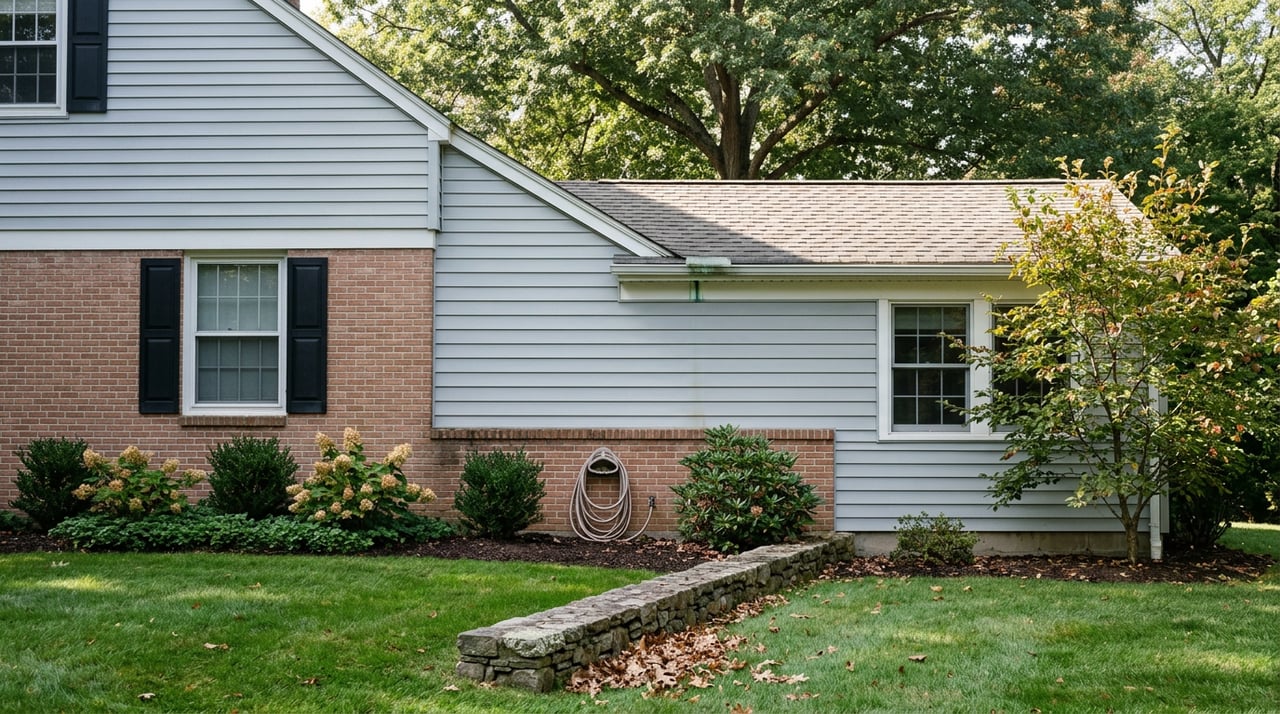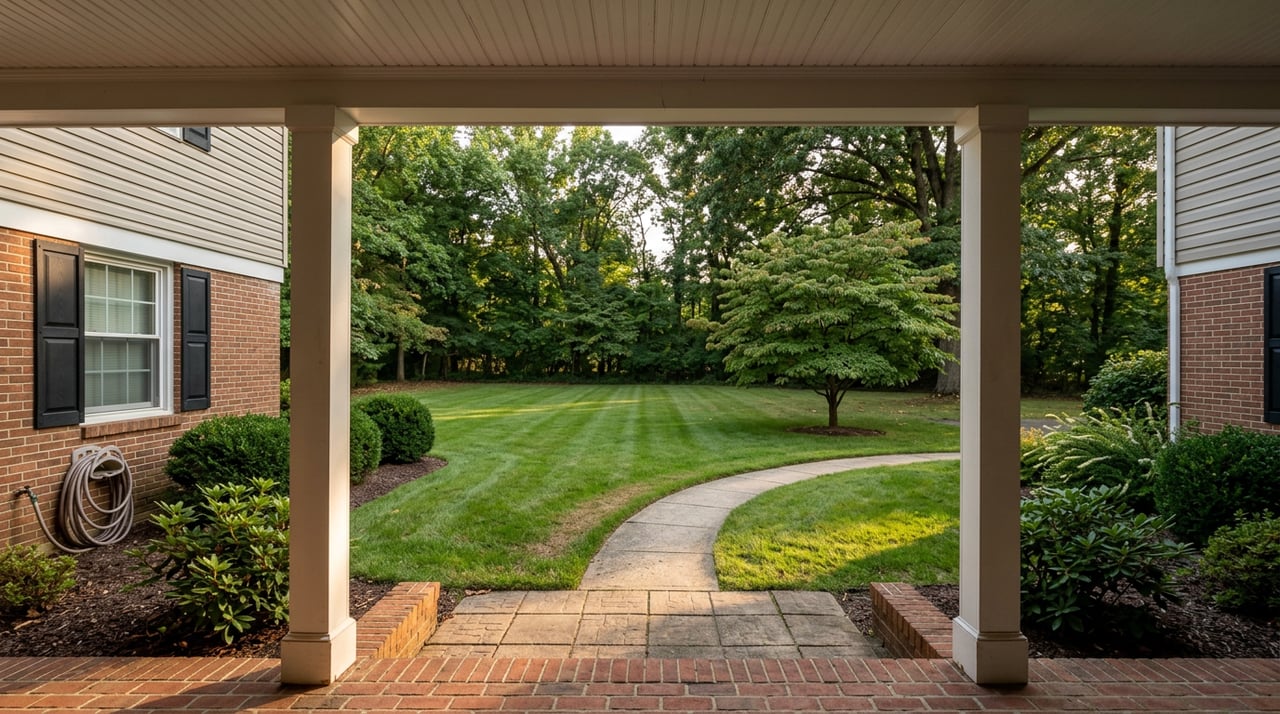
Drive past the Gatehouse at 1 Cliff Road on a Saturday morning and the village does what it always does: it goes quiet almost immediately. No street parking, no curbside cans waiting for pickup, no through traffic cutting a corner to somewhere else. Keep going toward the water and the road narrows, the trees close in, and somewhere past the last driveway the pavement runs out at Nonowantuc Trail. This is where most people assume the village simply ends. It doesn't. It splits.
On one side of that line is John W. Sheila Knapp Beach, open only to residents with a parking sticker. On the other, a few hundred yards further out at the very tip of the peninsula, is the 113-acre McAllister County Park, open to anyone in Suffolk County who wants to park a car and walk down to the sand dunes ringing Pirate's Cove. Two beaches, one peninsula, a boundary most residents drive past without ever registering where it actually falls. That boundary is worth understanding, because it explains more about how Belle Terre works than any brochure about the gate ever will.
The private beach has rules the public park doesn't
Sheila Knapp Beach is small on purpose. Swimming is limited to a roped-off area during posted lifeguard hours, parking requires a resident sticker, and the whole operation runs on a summer calendar that the village publishes and enforces. For six weeks each year, from the start of July through the second week of August, the village runs a youth program there for kids ages 4 to 16, built around an American Red Cross swim course along with water safety and arts and crafts. That program just wrapped for the season this past week, which means the beach is now in its quieter late-summer stretch, favoring early risers and evening walkers over the midday crowd of the program's final weeks.
Walk the other direction, out past the beach to the tip of Mt. Misery, and the rules change completely. McAllister County Park is Suffolk County land, not village land, and it draws boaters, kayakers, and anyone who wants to watch the Bridgeport-Port Jefferson ferry cross the Sound from a public vantage point. The cove itself has an origin story that explains why it exists at all: in the 1920s and 1930s, sand and gravel companies dredged large sections of this coastline to feed New York City's concrete industry, hollowing out what is now known as Pirates Cove before Belle Terre's residents organized against the mining and won. As one Long Island historian summed up the era, "the sand had to come from somewhere." Here, it came from underneath people's own backyards, and stopping it was the reason the village incorporated in 1931 in the first place.
That history is not a footnote. It's the reason the private beach and the public park sit so close together at all. The residents who fought the dredgers didn't just save their shoreline, they drew a line around it, and the beach-versus-park split at the peninsula's tip is that line made physical, still holding a century later.
The park in the middle of the village is smaller than people expect
Between the Gatehouse and the peninsula tip sits Belle Terre Park, the village's own recreational ground rather than a county one. It's modest by design: a paved walking path, a playground, and a single pickleball court, the kind of amenity that fits a village of roughly 800 year-round residents rather than a town looking to fill a recreation budget. The Belle Terre Community Center, housed in the same building as Village Hall at 55 Cliff Road, hosts the seasonal gatherings that keep the park from being just a patch of pavement and grass. Two stand out on the yearly calendar: an Easter egg hunt in spring and a Resident Party in the fall, both organized by the volunteer Belle Terre Community Association rather than the village government itself. Membership in the association is optional, which sets it apart from a mandatory HOA fee, but the fall party has been a fixture long enough that longtime residents plan around it. With the calendar reading mid-August, that party is only weeks away.
The wooded stretches along Cliff Road offer a different kind of daily rhythm. Mature tree cover and low development density have made the area a reliable spot for wildlife that doesn't show up in denser parts of the North Shore, including breeding bald eagles, along with regular owl and turkey sightings. None of this is staged or managed the way the beach hours are. It's simply what happens when a village keeps its lot minimums at one acre and its tree-cutting ordinances strict enough that the canopy stays intact.
The quiet is managed, not accidental
It would be easy to describe Belle Terre's calm as a passive quality, the kind of thing that just happens when a place is small and residential. The details say otherwise. Street parking isn't allowed anywhere in the village. Trash is collected on residents' own property rather than at the curb, and the only curbside pickups all year are two special collections for bagged leaves and yard debris, one in late spring and one in late fall. Village ordinances reach into noise limits, pet rules, garage sales, and even how much tree trimming a homeowner can do on their own. None of this is unusual for an incorporated village, but the cumulative effect is a level of daily texture control that most Long Island neighborhoods don't attempt. The hush a visitor notices at the Gatehouse isn't ambient. It's the result of a code book that residents have been renewing, ordinance by ordinance, since 1931.
Even the peninsula's more eccentric history fits this pattern of a small place holding onto its own character. For decades before her death in 2014, a Bulgarian-born countess split her time between a landmark pink mansion near the tip of Belle Terre and a castle in the Caribbean, and that same mansion turned up on screen in the 1989 film She-Devil. It's the kind of detail that only surfaces if you've spent time actually looking into this specific stretch of shoreline rather than treating it as one more North Shore enclave.
What this means for a Saturday
None of this changes what a weekend in Belle Terre looks like on the surface. Residents still walk the paved path at Belle Terre Park, still get a sticker and head down to Sheila Knapp Beach, still drive past McAllister County Park and sometimes stop to watch the ferry cut across the Sound. What changes is understanding why the village feels the way it does. The quiet isn't the absence of activity. It's the presence of a boundary, drawn nearly a century ago by residents who didn't want their shoreline dredged out from under them, and maintained every summer since in the small print of a parking sticker and a rope line in the water.
If you're the kind of person who notices details like that in your own neighborhood, you probably already know this village better than most guides give it credit for. And if a friend or family member is ever curious what a home behind that gate is actually worth, the team at SERHANT. Port Jefferson spends its time in exactly this kind of local detail and is glad to talk it through.