If you have started looking at homes in Mount Sinai, you have probably noticed something quickly: this hamlet does not feel like one uniform market. One street may lean historic, another may feel tucked near the water, and another may put you close to everyday errands and major roads. That can make your search feel more complex, but it also gives you more ways to find the right fit. In this guide, you will get a clearer picture of Mount Sinai’s main residential pockets, the housing styles you are most likely to see, and how location can shape daily life. Let’s dive in.
How Mount Sinai is shaped
Mount Sinai is a hamlet in the Town of Brookhaven, and it stands out as a strongly owner-occupied community. The latest Census Bureau QuickFacts profile reports a 96.5% owner-occupied rate, a median owner-occupied home value of $637,700, and a mean travel time to work of 32.6 minutes. Brookhaven’s hamlet study also describes Mount Sinai as a residential community where single-family, owner-occupied homes are the norm.
That matters when you start comparing neighborhoods. Instead of expecting one consistent housing pattern across town, it helps to think of Mount Sinai as a set of micro-markets. In practical terms, most buyers are choosing among four broad categories: the historic core, waterfront and open-space pockets, conventional interior streets, and HOA-style communities.
North Country Road historic homes
If you are drawn to older homes and a more established setting, the North Country Road area is the best place to start. The Mount Sinai Civic Association identifies the Historic District along North Country Road as a pocket with well-preserved homes and buildings, and Brookhaven’s historic district map places the Mount Sinai Historic District around the North Country Road and County Road 20 corridor.
This part of Mount Sinai tends to feel like the oldest layer of the hamlet. You may see homes and buildings tied to local history, including properties referenced by the civic association such as the Davis house, Tillotson house, Ketchum house, Selah Homan house, and Theodore Velsor Davis house. For buyers, the appeal here is often character, established streets, and a setting that feels different from a newer subdivision.
What to expect in the historic core
Homes in and around the historic area may appeal to buyers who care more about charm and setting than a cookie-cutter layout. While every property is different, this pocket is typically considered for its architectural character and its connection to one of the oldest parts of Mount Sinai.
If you are comparing this area with newer sections of town, it helps to focus on lifestyle fit. A historic-area home may offer a very different feel from a home in a planned community or a more typical interior subdivision.
Harbor and waterfront pockets
If water access and open space are high on your list, look closely at the Cedar Beach, Mount Sinai Harbor, Harbor Beach Road, Shore Road, and Pipe Stave Hollow area. Brookhaven’s harbor plan describes this management area as dominated by public recreational open space, which accounts for 61% of the land use, with low-density and medium-density residential uses making up much of the rest.
This is one of the most distinct parts of Mount Sinai because the surroundings shape the housing experience. The harbor plan notes that residential lot sizes in the area range from 0.29 acres to 88.39 acres, that some homes are seasonal, and that about 85 private residences sit at or near the shoreline. That range alone shows how varied this pocket can be.
Why buyers look near Cedar Beach
Cedar Beach is one of Mount Sinai’s major recreation anchors. The Town of Brookhaven lists beach access, a marina, boat ramp, fishing, playground, and trails, along with the Marine Environmental Stewardship Center.
For many buyers, that means this area is less about being close to errands and more about being close to the water and outdoor amenities. If your ideal routine includes shoreline access, boating, or nearby recreational space, these streets may feel very different from the more central parts of town.
Housing feel near the harbor
The homes in this area are not one single product type. Some are near shoreline conditions, some sit on lower-density stretches, and some may reflect a more seasonal-use history. Buyers usually need to compare not just the house itself, but also the lot, access, and the tradeoff between convenience and waterfront-oriented surroundings.
Route 25A and interior neighborhoods
If your priority is a more conventional neighborhood feel with easier access to daily services, the Route 25A side of Mount Sinai deserves attention. The Brookhaven hamlet study identifies Route 25A as the community’s commercial and business corridor, and it also notes that parking lots along the corridor should be interconnected to make local shopping easier.
This part of town tends to function as the practical center for errands and day-to-day movement. Heritage Park and the Rose Caracappa Senior Center are also located on the Route 25A and Route 83 side, which adds to the park-and-services feel in the central corridor.
Common home styles in Mount Sinai
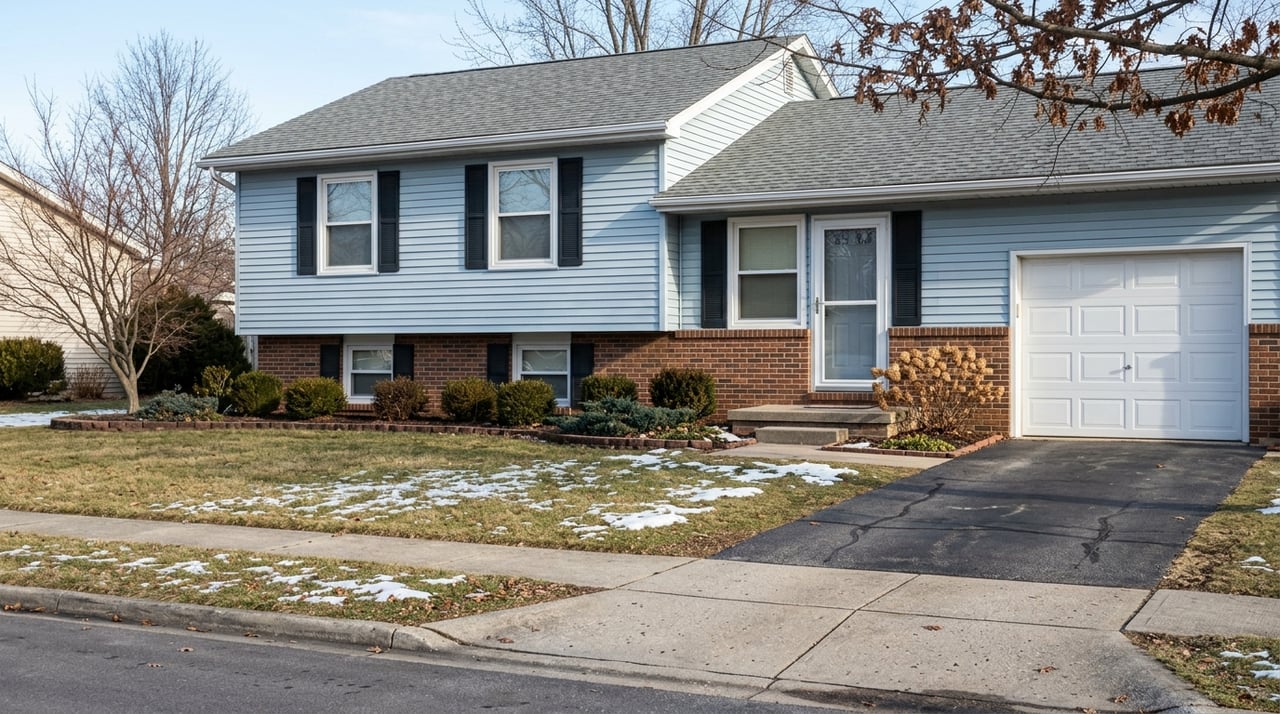
Across the broader hamlet, housing is mixed rather than uniform. A local housing guide describes Mount Sinai’s housing stock as including:
- Ranches
- Colonials
- New traditional homes
- A few 1980s contemporary houses
The same guide notes that many homes sit on at least one-third of an acre. That means many interior streets offer the classic Long Island suburban pattern: detached homes, driveways, yards, and a bit more breathing room than you may find in more compact housing formats.
What interior streets can offer
For buyers who want a balance of neighborhood feel and practicality, the interior areas near major roads can be a strong match. You may be closer to services and key routes while still shopping from a range of detached home styles.
This category often appeals to buyers who want space, a more familiar suburban layout, and easier day-to-day access without stepping into a condo or HOA setting.
HOA and lower-maintenance options
Mount Sinai also has several established condo and homeowners-association communities. Suffolk County Planning’s inventory identifies major community pockets that include The Villages at Mount Sinai, Plymouth Estates, Strathmore Terrace, The Ranches at Mount Sinai, and The Hamlet at Willow Creek.
These neighborhoods give buyers another housing path altogether. Instead of prioritizing larger private lots, they often trade private land for shared amenities and a lower-maintenance lifestyle.
Notable community pockets
According to Suffolk County Planning, major HOA or condominium communities in Mount Sinai include:
- The Villages at Mount Sinai, 370 units
- Plymouth Estates, 285 units
- Strathmore Terrace, 226 units
- The Ranches at Mount Sinai, 186 units
- The Hamlet at Willow Creek, 177 units
Official community information describes The Hamlet at Willow Creek as a 177-home golf villa and estate condominium community built around an 18-hole golf course. The Vineyards at Mount Sinai is described as a 55+ luxury community.
Who tends to consider these options
These communities can make sense if you want Mount Sinai but prefer a smaller-footprint home, shared amenities, or less exterior upkeep. They are also useful to compare if you are deciding between a detached single-family home and a more managed community setting.
As always, the right fit comes down to your priorities. Some buyers want a larger yard and more separation, while others prefer convenience and lower day-to-day maintenance.
Commute and daily convenience
Where you live in Mount Sinai can shape your day just as much as the house itself. Brookhaven’s hamlet study identifies Route 25A, CR83 or Patchogue-Mount Sinai Road, Canal Road, North Country Road, Mount Sinai Coram Road, and Pipe Stave Hollow Road as the most traveled roads in the area.
That road network reinforces a simple truth about Mount Sinai: it is primarily a driving community. Census QuickFacts reports a mean travel time to work of 32.6 minutes, which gives buyers a useful baseline when thinking about routine travel.
Rail access nearby
For commuters who want a train option, the nearby Port Jefferson station is the key rail connection. The MTA station page notes Suffolk County Transit connections there, and the broader LIRR Port Jefferson Branch continues to serve Manhattan terminals such as Penn Station and Grand Central Madison.
That does not make Mount Sinai a rail-first market, but it does give some buyers another layer of flexibility. If commute planning matters to you, it is worth weighing road access, station proximity, and how often you expect to travel.
How to choose the right Mount Sinai pocket
The easiest way to narrow your search is to start with lifestyle, not just price or square footage. Mount Sinai makes more sense when you match your goals to the area’s housing type.
A simple way to think about it is this:
- Focus on North Country Road if you want historic character
- Look near Cedar Beach, Harbor Beach Road, and Shore Road if you want water access and open space
- Stay closer to Route 25A and Route 83 if everyday errands matter most
- Compare The Ranches, Willow Creek, The Villages, and The Vineyards if you want lower-maintenance living
That framework can save you time and help you compare homes more realistically. Two houses with similar size or price may offer very different day-to-day experiences depending on which pocket of Mount Sinai they are in.
Why local guidance matters in Mount Sinai
Because Mount Sinai behaves like a collection of micro-markets, neighborhood context matters. The right home is not only about style or list price. It is also about whether you want historic surroundings, a harbor-oriented setting, a more central location for errands, or a community with shared amenities.
That is where local market knowledge becomes especially useful. When you understand how each pocket lives, shops, commutes, and feels, it becomes much easier to sort through listings with confidence.
If you are thinking about buying or selling in Mount Sinai, the right strategy starts with understanding how each part of the hamlet fits your goals. The team at The Port Jefferson Team can help you evaluate Mount Sinai’s neighborhoods, compare housing styles, and make a move with clear local insight.
FAQs
What types of homes are common in Mount Sinai, NY?
- Mount Sinai’s housing stock commonly includes ranches, colonials, new traditional homes, and a few 1980s contemporary houses, with many homes on at least one-third of an acre.
Which part of Mount Sinai has historic homes?
- The North Country Road area contains the Mount Sinai Historic District, which includes well-preserved historic homes and buildings identified by local civic and town sources.
Where should you look for waterfront homes in Mount Sinai?
- Buyers looking for waterfront or near-water settings often focus on the Cedar Beach, Mount Sinai Harbor, Harbor Beach Road, Shore Road, and Pipe Stave Hollow area.
Are there HOA communities in Mount Sinai, NY?
- Yes. Major HOA and condominium communities in Mount Sinai include The Villages at Mount Sinai, Plymouth Estates, Strathmore Terrace, The Ranches at Mount Sinai, and The Hamlet at Willow Creek, with The Vineyards at Mount Sinai also offering a 55+ community option.
Is Mount Sinai a car-dependent area?
- Mount Sinai is primarily a driving community, with major routes including Route 25A, Patchogue-Mount Sinai Road, Canal Road, North Country Road, Mount Sinai Coram Road, and Pipe Stave Hollow Road.